Exodus 28 - Priestly Garments and Consecration
Timeline: 1450 BC
|
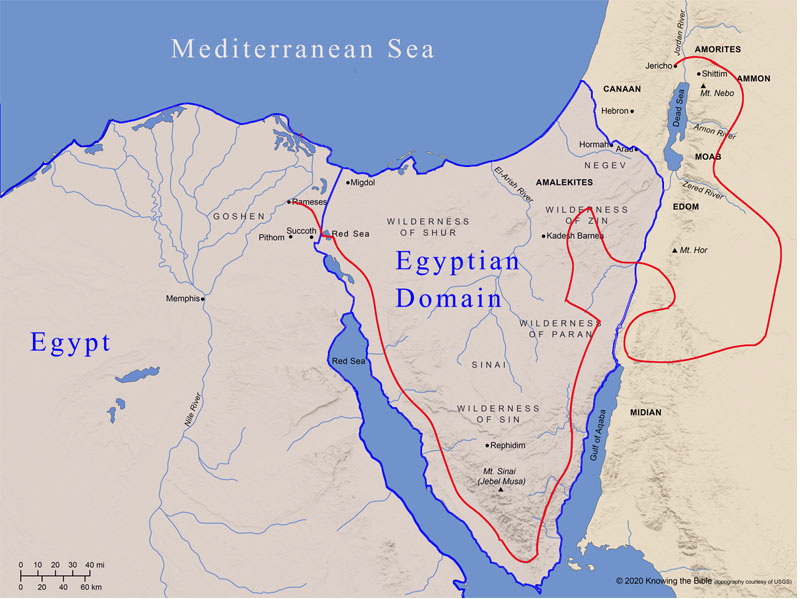
Israelite Journeys Rameses
|
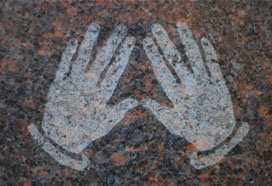
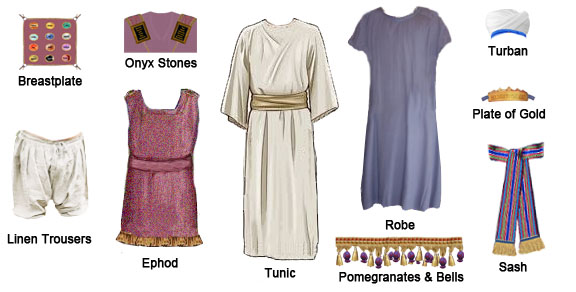
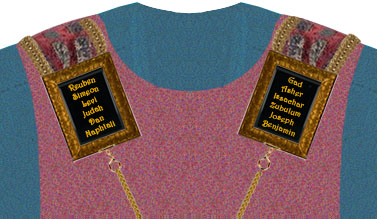
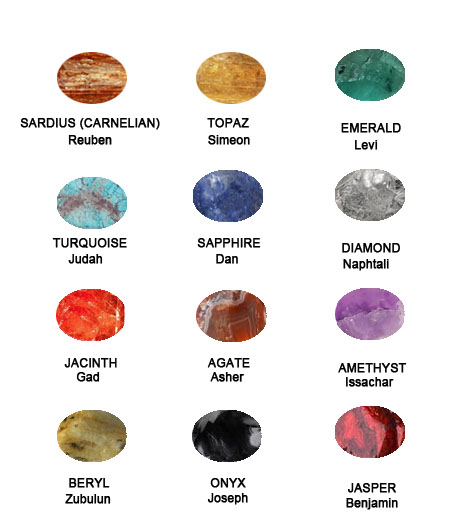
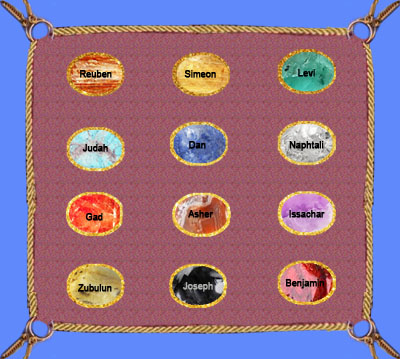
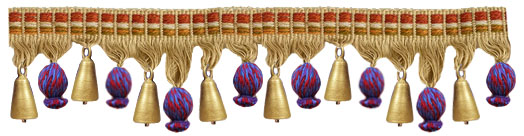
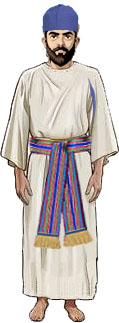
As the leader of the Exodus, Moses took upon the role as the very first priest. Then God singled out Aaron and his son to serve and minister to Him. Their role was to connect the people to the Lord. They were to teach His people upright ways and just laws, as it is written. Being a Levite had special privileges but also had strict rules. They have a loud and clear call to selflessly serve God and the people. The priestly status of a Levite has been handed down from father to son through the ages. During the post-Temple era, rabbis replaced the Cohanim as teachers and authorities on the Law in the Diaspora. However, the priesthood is still a right of blood that belongs to the Cohanim, who are descended from Aaron. Today, if you meet someone with the last name of Cohen, Kahn, or Katz, you will know that that person has a lineage that can be traced back to the priestly sector of Aaron and his sons who served as priests. A kohen (also spelled cohen or kohan) is a descendant of the sons of Aaron. Genetic studies among Cohanim from all over the world reveal an unbroken link back to a common ancestor, Aaron. The Y chromosomes of the Cohanim have an unusual set of genetic markers rarely found outside of Jewish populations. By looking at the differences between Y chromosomes in the Cohanim, researchers can roughly estimate that most Cohanim have approximately 100 links in the chain between them and Aaron. If you visited a cemetery in Israel, you may find gravestones with special markings. The priesthood of the Cohanim have specific etchings on their tombstones such as the ones here: Although rabbis replaced the Cohanim as teachers and authorities on the Law, the priesthood does not pertain to them. It belongs by right of blood to Cohanim, who trace their lineage back to Aaron. The surnames of many Cohanim indicate their status. The more elevated the Cohanim, the more limited was their self-expression. They were required to live a life of added scrutiny and purity in order to serve the spiritual needs of humanity. They could not go to a cemetery or come in contact with the dead. They also could not eat any food that may have come into contact with sources of ritual impurity as defined by the Torah. They would have to be available to aid and support the spiritual needs of the Jewish people at a moment's notice. Cohanim who served in the Holy Temple were required to have a haircut at least once every thirty days, and the high priest once a week. Moreover, when the Levites were first consecrated in the wilderness, they were instructed to shave off all their hair expressing the idea that one's hair is a gateway into their individual soul and personality. Such self-expression was off-limits for Cohanim. 1 "Now take Aaron your brother, and his sons with him, from among the children of Israel, that he may minister to Me as priest, Aaron and Aaron's sons: Nadab, Abihu, Eleazar, and Ithamar. And you shall make holy garments for Aaron your brother, for glory and for beauty. So you shall speak to all who are gifted artisans, whom I have filled with the spirit of wisdom, that they may make Aaron's garments, to consecrate him, that he may minister to Me as priest. And these are the garments which they shall make: a breastplate, an ephod, a robe, a skillfully woven tunic, a turban, and a sash. So they shall make holy garments for Aaron your brother and his sons, that he may minister to Me as priest." Each element of the attire was crafted to inspire reverence for God and to enhance the dignity of the priestly office. Every piece had a specific purpose. The garments worn by priests were symbolic of being set apart for God's work of atoning for sin. A priest could not serve in the temple unless he was wearing the sacred garments. Aaron was Israel's first high priest, and the commandments regarding his garments set a precedent for all future priests in Israel. They were passed from father to son, generation to generation. When the High Priest's uniform became unusable through wear and tear, it was not destroyed, but hidden away so that no other man could ever wear it. 5 "They shall take the gold, blue, purple, and scarlet thread, and the fine linen, and they shall make the ephod of gold, blue, purple, and scarlet thread, and fine woven linen, artistically worked. It shall have two shoulder straps joined at its two edges, and so it shall be joined together. And the intricately woven band of the ephod, which is on it, shall be of the same workmanship, made of gold, blue, purple, and scarlet thread, and fine woven linen. These garments were made by craftsmen who were especially gifted. They were made of the same material that was used for the curtain in the Holy of Holies. The ephod was an apron-like garment set apart for the priest. 9 "Then you shall take two onyx stones and engrave on them the names of the sons of Israel: six of their names on one stone and six names on the other stone, in order of their birth. With the work of an engraver in stone, like the engravings of a signet, you shall engrave the two stones with the names of the sons of Israel. You shall set them in settings of gold. And you shall put the two stones on the shoulders of the ephod as memorial stones for the sons of Israel. So Aaron shall bear their names before the Lord on his two shoulders as a memorial. You shall also make settings of gold, and you shall make two chains of pure gold like braided cords, and fasten the braided chains to the settings. The onyx stones served a significant role in the attire of the high priest, carrying the names of the sons of Israel engraved on them as a memorial before the Lord. They also had a significant spiritual meaning. Engraving or writing one's name on an object was a way of claiming ownership or authority over it. In this case, it symbolized God's ownership and authority over the people of Israel. By having their names written on the stones, the people were being consecrated and set apart as God's chosen ones. Other passages refer to the Ephod: Judges 8:26-27 Gideon made an ephod from gold, jewels, purple raiment, and golden chains taken from the Madianites. All Israel worshiped the ephod, which became a snare to Gideon and his family. " 1 Samuel 2:18 Samuel was ministering before the Lord—a boy wearing a linen ephod. " 1 Samuel 21: 9 The priest replied, "The sword of Goliath the Philistine, whom you killed in the Valley of Elah, is here; it is wrapped in a cloth behind the ephod. If you want it, take it; there is no sword here but that one." David said, "There is none like it; give it to me." 2 Samuel 2:27-28 Now a man of God came to Eli and said to him, "This is what the Lord says: 'Did I not clearly reveal myself to your ancestor's family when they were in Egypt under Pharaoh? I chose your ancestor out of all the tribes of Israel to be my priest, to go up to my altar, to burn incense, and to wear an ephod in my presence." 2 Samuel 6:14-15 Wearing a linen ephod, David was dancing before the Lord with all his might, while he and all Israel were bringing up the ark of the Lord with shouts and the sound of trumpets. 15 "You shall make the breastplate of judgment. Artistically woven according to the workmanship of the ephod you shall make it: of gold, blue, purple, and scarlet thread, and fine woven linen, you shall make it. It shall be doubled into a square: a span shall be its length, and a span shall be its width. And you shall put settings of stones in it, four rows of stones: The first row shall be a sardius, a topaz, and an emerald; this shall be the first row; the second row shall be a turquoise, a sapphire, and a diamond; the third row, a jacinth, an agate, and an amethyst; and the fourth row, a beryl, an onyx, and a jasper. They shall be set in gold settings. And the stones shall have the names of the sons of Israel, twelve according to their names, like the engravings of a signet, each one with its own name; they shall be according to the twelve tribes. The mention of precious gems can be found multiple times throughout the bible, creating a theme of importance. Gemstones are valuable because they are a rare and desirable commodity. When we read the description of the twelve precious stones on the breastplate of judgment we are reminded of the twelve precious stones in the foundation of Heaven. Ezekiel 28:13 You were in Eden, the garden of God; Every precious stone was your covering: The sardius, topaz, and ddiamond, beryl, onyx, and jasper, Sapphire, turquoise, and emerald with gold. Revelation 21:19-21 The foundations of the wall of the city were adorned with all kinds of precious stones: the first foundation was jasper, the second sapphire, the third chalcedony, the fourth emerald, the fifth sardonyx, the sixth sardius, the seventh chrysolite, the eighth beryl, the ninth topaz, the tenth chrysoprase, the eleventh jacinth, and the twelfth amethyst. The twelve gates were twelve pearls: each individual gate was of one pearl. And the street of the city was pure gold, like transparent glass. Zechariah 9:16 The LORD their God will save them in that day, As the flock of His people. For they shall be like the jewels of a crown, Lifted like a banner over His land— 22 "You shall make chains for the breastplate at the end, like braided cords of pure gold. And you shall make two rings of gold for the breastplate, and put the two rings on the two ends of the breastplate. Then you shall put the two braided chains of gold in the two rings which are on the ends of the breastplate; and the other two ends of the two braided chains you shall fasten to the two settings, and put them on the shoulder straps of the ephod in the front.You shall make two rings of gold, and put them on the two ends of the breastplate, on the edge of it, which is on the inner side of the ephod. And two other rings of gold you shall make, and put them on the two shoulder straps, underneath the ephod toward its front, right at the seam above the intricately woven band of the ephod. They shall bind the breastplate by means of its rings to the rings of the ephod, using a blue cord, so that it is above the intricately woven band of the ephod, and so that the breastplate does not come loose from the ephod. So Aaron shall bear the names of the sons of Israel on the breastplate of judgment over his heart, when he goes into the holy place, as a memorial before the Lord continually." The breastplate, the ephod, and the two shoulder pieces all went together but the central item was the breastplate. The breastplate is not called "of judgment" because God judged His people but because the Lord purified and cleansed His people to make them His shining testimony. God used the breastplate of judgment to speak to His people and lead them. 30 "And you shall put in the breastplate of judgment the Urim and the Thummim, and they shall be over Aaron's heart when he goes in before the Lord. So Aaron shall bear the judgment of the children of Israel over his heart before the Lord continually. The breastplate was to be made from the same material as the ephod. The square breastplate was to be formed from one rectangular piece of cloth— about 6 inches by 12 inches then folded in half to form a pouch which contained two gemstones. The term "Urim and Thummim" is Hebrew for "lights and perfections" or "perfect light". Although Moses spoke directly with God, Joshua and his successors could not speak to the Lord directly. The Urim and Thummim were used as a way of receiving revelation from God. The two stones would indicate which of two alternatives was right and therefore would answer "yes" or "no" questions. According to classical rabbinical literature, the individual would stand facing the fully dressed high priest, and ask a yes or no question. The High Priest would stand facing the Ark of the Covenant with the inquirer behind him, facing the Priest's back. After the inquirer asked his question, the Holy Spirit would immediately overcome the Priest and he would see the letters protruding in a prophetic vision. The answers were received with divine inspiration so that the high priest acted as a prophet. The Urim and Thummim are only referred to once after the Babylonian exile. The Bible contains no record of its use after the time of David. Revelation from God through the prophets replaced the use of the high priestly Urim and Thummim. Once all the prophets died, the Urim and Thummim became extinct. 31 "You shall make the robe of the ephod all of blue. There shall be an opening for his head in the middle of it; it shall have a woven binding all around its opening, like the opening in a coat of mail, so that it does not tear. And upon its hem you shall make pomegranates of blue, purple, and scarlet, all around its hem, and bells of gold between them all around: a golden bell and a pomegranate, a golden bell and a pomegranate, upon the hem of the robe all around. And it shall be upon Aaron when he ministers, and its sound will be heard when he goes into the holy place before the Lord and when he comes out, that he may not die.
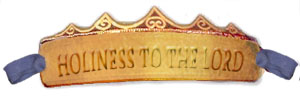
36 "You shall also make a plate of pure gold and engrave on it, like the engraving of a signet: HOLINESS TO THE LORD. 37 And you shall put it on a blue cord, that it may be on the turban; it shall be on the front of the turban. So it shall be on Aaron's forehead, that Aaron may bear the iniquity of the holy things which the children of Israel hallow in all their holy gifts; and it shall always be on his forehead, that they may be accepted before the Lord. 39 "You shall skillfully weave the tunic of fine linen thread, you shall make the turban of fine linen, and you shall make the sash of woven work. "For Aaron's sons you shall make tunics, and you shall make sashes for them. And you shall make hats for them, for glory and beauty. So you shall put them on Aaron your brother and on his sons with him. You shall anoint them, consecrate them, and sanctify them, that they may minister to Me as priests. And you shall make for them linen trousers to cover their nakedness; they shall reach from the waist to the thighs. They shall be on Aaron and on his sons when they come into the tabernacle of meeting, or when they come near the altar to minister in the holy place, that they do not incur iniquity and die. It shall be a statute forever to him and his descendants after him. The ordinary priests wear four garments: tunic, pants, hat, and belt when serving in the temple. The rest of the time they wore regular clothing. Bible Study Questions 1. Who did God select to minister to Him? a. Moses and his sons. 2. Why did God tell Moses to make holy garments for his priests? a. For protection against their enemies. 3. What color should the garments be? a. Silver, blue, purple, and scarlet. 4. What was engraved on the two onyx stones? a. The names of the sons of Israel. 5. What was the breastplate called? a. The breastplate of mercy. 6. What color should the robe of the ephod be? a. Blue 7. What should be on the front of the turban? a. A plate of pure silver. 8. What should be all around the hem of the robe? a. Golden bells. 9. What should the sons wear? a. Tunics of virgin sheep wool. 10. Why were they supposed to wear linen trousers? a. It was part of their uniform. |
| Cassie, Matt, Joe | |